
Introduction
How to Prepare for Your First Job Interview
Stepping into the professional world begins with your first job interview, a pivotal milestone that transitions you from an aspiring candidate into a professional. For many, this moment is a blend of intense excitement and nerve-wracking anxiety, as it represents the first real test of your academic and personal achievements in a corporate setting. Navigating this process successfully requires more than just showing up with a copy of your resume; it demands a strategic understanding of how to present your value proposition to potential employers. By approaching this milestone with a structured mindset, you can transform your nervous energy into a confident, polished presentation that sets you apart from other applicants.
The true essence of interview preparation lies in bridging the gap between what a company needs and what you can offer. As a first-time interviewee, you may not possess years of industry experience, but thorough preparation allows you to showcase your adaptability, enthusiasm, and transferable skills. This foundational guide is designed to walk you through the structural phases of interview readiness, helping you decode job descriptions, practice effective communication, and project authentic confidence. Ultimately, view this first interview not as a interrogation, but as a mutual conversation to determine if the company culture and the role align perfectly with your career aspirations.
Table of Contents

Why and How to Prepare for Your First Job Interview is Essential
Preparing for your first interview is essential because it directly counteracts performance anxiety and builds foundational professional confidence. When you enter an interview room without preparation, your brain naturally focuses on the fear of the unknown, leading to stuttering, memory blanks, or rambling answers. Thorough preparation—such as researching the company’s mission, understanding its market position, and reviewing the job description—gives you a solid cognitive framework. This structural knowledge acts as a mental safety net, ensuring that even under pressure, you can speak articulately about how your background aligns with the organization’s current goals.
Furthermore, robust preparation is the most effective way to demonstrate genuine interest and respect to the hiring committee. Interviewers can instantly distinguish between a candidate who casually applied and one who took the time to study their business model, recent press releases, and corporate values. In a competitive job market where many entry-level candidates possess similar academic qualifications, your depth of preparation becomes your primary competitive advantage. It signals to the employer that you possess a strong work ethic, attention to detail, and a proactive attitude—traits that are highly valued in any corporate ecosystem. So how to prepare for your first job interview is as essential as your technical skills.
Images, How to prepare for your first Job Interview


Tips for a Successful Interview: How to Prepare for your first Job Interview
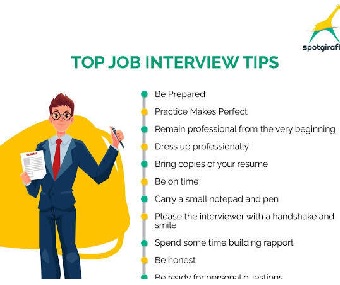
Achieving success in your first interview requires a balanced approach combining thorough pre-interview research, polished communication strategies, and impeccable professional etiquette. your must learn how to prepare for your first job interview. The knowledge, skills, and qualities you develop as a student are valuable assets that can help you learn how to prepare for your first job interview with confidence and professionalism.
Pre-Interview Research and Mapping
- Analyze the job description to identify core competencies and required software tools.
- Study the company website to understand their target audience, products, and services.
- Review their social media profiles to gauge the current company culture and tone.
- Research your interviewers on LinkedIn to understand their professional backgrounds and tenures.
- Prepare three insightful questions to ask the interviewer about team dynamics or future growth.
Master Communication and Interview Frameworks
- Utilize the STAR method (Situation, Task, Action, Result) to structure behavioral answers concisely.
- Quantify your past achievements using percentages, dollar amounts, or hours saved where possible.
- Maintain steady eye contact to project trustworthiness and engagement throughout the conversation.
- Practice active listening by pausing for a brief second before responding to complex questions.
- Avoid using filler words such as “um,” “like,” and “basically” by embracing natural pauses.
Logistics and Professional Etiquette
- Dress one level above the company’s daily dress code to ensure a professional impression.
- Arrive exactly 10–15 minutes early for in-person interviews to account for security checks.
- Test your digital setup (camera, microphone, internet, lighting) 24 hours before a virtual interview.
- Bring three printed copies of your resume and a clean notepad for in-person meetings.
- Send a personalized thank-you email within 24 hours to express gratitude to each interviewer.
The knowledge, skills, and qualities you develop as a student can help you understand how to prepare for your first job interview with confidence and professionalism.
Outcomes of “How to Prepare for your first Job Interview”
[Thorough Preparation]
       │
       ├─► [Reduced Anxiety & Clearer Communication] ──► [High-Impact Articulation]
       ├─► [Deep Company & Role Alignment]            ──► [Demonstrated Competence]
       └─► [Polished Professional Etiquette]         ──► [Memorable First Impression]
       │
       ▼
[Increased Job Offer Probability & Accelerated Career Onboarding]
The primary outcome of rigorous interview preparation is heightened situational awareness and execution, allowing you to control the narrative of the conversation. When you have pre-formulated stories using the STAR method, you no longer struggle to find examples of your leadership, problem-solving, or teamwork capabilities. Instead, you deliver crisp, high-impact responses that highlight your resourcefulness. This fluidity not only impresses the hiring panel but also shifts the interview from a standard question-and-answer session into a high-level professional dialogue, significantly increasing your chances of advancing to the final rounds. The knowledge, skills, and qualities you develop as a student are valuable assets that can guide you on how to prepare for your first job interview with confidence and professionalism.
On a broader scale, the long-term outcome of this preparation is the cultivation of a repeatable professional framework for your entire career. The research habits, psychological grounding techniques, and communication skills you develop during this first experience will serve as the blueprint for every subsequent career transition. Even if you do not land the specific role, entering the market fully prepared guarantees that you walk away with constructive feedback, expanded professional networks, and elevated confidence. You transform a potentially terrifying hurdle into a predictable, manageable process that accelerates your upward mobility in the professional world.
External Links: How to Prepare for your first Jop Internview
Learn how to master behavioral questions using the Harvard Business Review Guide on the STAR Method.
- Explore modern workspace trends and company reviews globally on Glassdoor Career Insights.
- Optimize your professional profile and network with peers using LinkedIn Job Search Strategies.
Frequently Asked Questions (FAQs)
Q1: What should I do if I do not know the answer to an interview question?
A1: Never try to bluff or fabricate an answer, as experienced interviewers will immediately notice. Instead, remain calm, acknowledge the complexity of the question, and explain your logical thought process. You can say: “I don’t have direct experience with that specific software, but based on my experience with similar tools, I would approach it by…” This response highlights your honesty, analytical thinking, and problem-solving mindset under pressure.
Q2: How should I explain a total lack of professional corporate experience?
A2: Pivot the conversation toward your transferable skills gained through academic projects, volunteer work, or extracurricular activities. Frame your university group projects as team management experiences, and position your thesis or coursework as data analysis or project execution. Employers hiring for entry-level roles prioritize your potential, enthusiasm, cognitive capability, and willingness to learn over extensive corporate tenure.
Q3: What is the ideal length for an answer to a behavioral interview question?
A3: The ideal length for a behavioral response is between 60 to 90 seconds. Adhering strictly to the STAR framework ensures you provide enough context without rambling or losing the interviewer’s attention. Spend 15% of your time on the Situation/Task, 70% on your specific Actions, and 15% on the measurable Results of your efforts.
Q4: Is it appropriate to discuss salary expectations during a first-round interview?
A4: Avoid bringing up compensation during the initial interview unless the recruiter or hiring manager asks you directly. The first round is structurally designed to evaluate your cultural fit, core skills, and alignment with the role. If asked directly, provide a researched salary range based on market standards for entry-level positions in your location, rather than a single rigid number.
Q5: How do I handle an interview panel consisting of multiple interviewers?
A5: When answering a question, initiate eye contact with the specific panel member who asked it. As you expand on your response, scan the room or screen to briefly engage the other panel members before returning your focus to the original questioner. This inclusive technique ensures that every interviewer feels respected, engaged, and connected to your narrative.
Q6: How long should I wait to follow up if I don’t hear back after an interview?
A6: Wait exactly five business days after your initial post-interview thank-you email before sending a polite follow-up inquiry. In this follow-up email, reiterate your enthusiasm for the position, ask if there are any additional materials you can provide, and inquire about their hiring timeline. Keep the message concise, professional, and entirely free of demanding or anxious language.
Final Thoughts: How to prepare for your first Job Interview
Navigating your first job interview is ultimately an educational journey rather than a definitive test of your self-worth. Every professional leader once sat in the exact same chair you are about to occupy, experiencing the same uncertainties and racing thoughts. Success is not merely the byproduct of luck; it is where targeted preparation meets a sudden opportunity. Equip yourself with deep knowledge of the company, refine your personal stories, dress the part, and walk into the room knowing you have done the foundational work required to succeed. Trust the preparation framework you have built, embrace the learning process, and view this experience as the exciting catalyst for a long, prosperous professional career.