
Introduction
How to Take Effective Notes in Class
Stepping into a fast-paced classroom without a structured system for capturing information is like trying to catch water with your bare hands. During complex lectures, critical concepts fly by quickly, leaving many students overwhelmed by information fatigue. Relying solely on your short-term memory is a risky gamble; research consistently shows that human minds forget up to 60% of new material within just nine hours of hearing it. To bridge the gap between listening and true comprehension, you need an actionable strategy designed for real-time academic environments.
Taking effective notes is not about transcribing every syllable your instructor utters. Instead, it is an active cognitive process that forces you to filter, interpret, and organize information into a cohesive personal database. By mastering targeted notation systems, you transition from a passive spectator in the classroom into an active participant in your own education. This guide breaks down ten proven note-taking strategies that will transform how you absorb information, streamline your study sessions, and elevate your academic performance.
Table of Contents
Images: How to take Effective Notes in Class
Pic 1 How to take Effective Notes in Class
Pic 2 How to take Effective Notes in Class
Pic 3 How to take Effective Notes in Class
Pic 4 How to take Effective Notes in Class
Why and How to Take Effective Notes in Class?
- Triggers Active Learning: Writing keeps your hands moving and your mind focused, eliminating daydreams and reducing digital distractions during long lectures.
- Combats the Forgetting Curve: Documenting ideas immediately shifts fleeting verbal explanations from short-term memory into durable long-term storage.
- Creates a Tailored Study Guide: Your notes compress thick, overwhelming textbooks into a personalized, high-yield summary highlighting exactly what the instructor values.
- Encourages Immediate Synthesis: Translating a professor’s lecture into your own words forces your brain to unpack, process, and truly understand complex relationships on the spot.
10 Proven Note: How to Take Effective Notes in Class
1. The Cornell Method
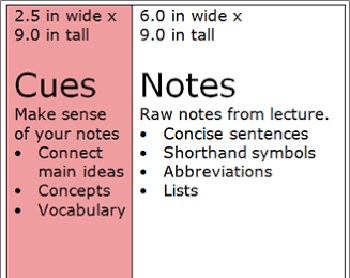
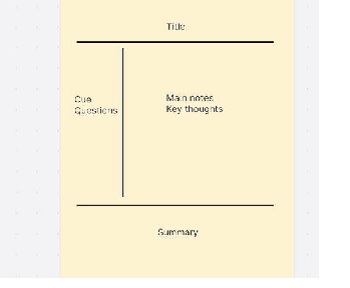
Divide your paper into three distinct areas: a narrow 2.5-inch column on the left (Cues), a wide 6-inch column on the right (Notes), and a 2-inch row across the bottom (Summary). Write main lecture ideas in the right column during class. Immediately after class, extract keywords or potential exam questions into the left column. Finally, write a brief, three-sentence summary at the bottom to consolidate the entire page. The Cornell Method is the 1st strategy how to take effective notes in class.
2. The Outline Method
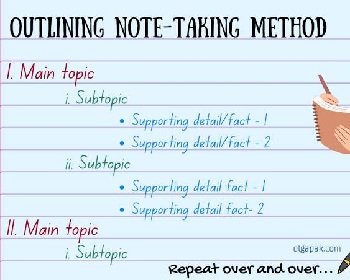
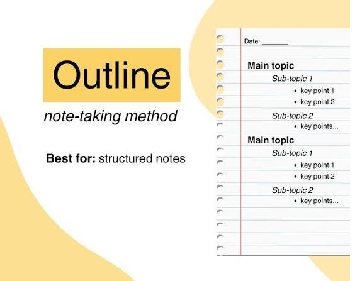
Organize highly structured material by using a logical hierarchy. Place broad, main concepts on the far left of the page as primary headings. Indent slightly to the right for subtopics, and indent once more for supporting bullet points, facts, or specific examples. This creates a clean, vertical roadmap that is incredibly easy to skim before exams. The Outline Method is the 2nd strategy how to take effective notes in class.
3. Mind Mapping
Perfect for highly conceptual or non-linear topics, mind mapping visually maps relationships between ideas. Write the central topic in the middle of a blank page inside a circle. Draw thick branches radiating outward for primary subtopics, and extend thinner branches from those for fine details and examples. The Mind Mapping is the 3rd strategy how to take effective notes in class.
4. The Charting Method
When a lecture focuses heavily on comparison data, historical timelines, or distinct categories, set up a table. Label your columns with clear categories (e.g., Concept, Pros, Cons, Applications). As the instructor speaks, simply slot facts directly into the corresponding grid squares to synthesize data rapidly.
5. The Sentence Method
If a lecture is delivered at an incredibly fast pace with few visual slides, write every distinct thought, fact, or topic change on its own numbered line. Avoid writing long paragraphs. This approach sacrifices structural grouping during class but ensures you capture maximum content that you can reorganize later.
6. Smart Abbreviations and Shorthand
Never waste time writing out long, repetitive words verbatim. Develop a consistent personal dictionary of abbreviations, such as utilizing w/ for with, b/c for because, Δ for change, and defn for definition. Saving fractions of a second on each line gives your brain more time to think deeply about what the instructor is saying.
7. The White Space Rule
Never cram your pages with wall-to-wall text. Purposely leave wide margins or empty lines between major points. This physical space provides structural breathing room where you can comfortably add textbook page numbers, late clarifications, or personal insights during post-class review sessions.
8. Paraphrase Everything
If you copy a professor’s slide word-for-word, your brain goes onto autopilot. Force yourself to interpret the concept and write it down using your own vocabulary. If you struggle to explain the concept simply in your own words, it serves as an immediate warning sign that you do not fully grasp the material.
9. Verbal Cue Tracking
Listen intently for linguistic signposts from your instructor. Phrases like “Most importantly,” “The core consequence is,” or “Three distinct factors drive this” are direct indicators of exam material. When you hear these, mark your notes with an exclamation point or star symbol to prioritize them.
10. The 24-Hour Review Cycle
Notes are only as valuable as your interaction with them. Dedicate 10 minutes within 24 hours of class to read over your text, fix messy handwriting, underline core vocabulary, and clear up confusing blocks. Doing this early prevents the raw lecture memory from fading completely.
Outcomes of These Strategies
Applying these structured methods transforms your daily study habits and yields highly measurable academic outcomes:
| Metric / Aspect | Passive Note-Taking | Strategic Note-Taking |
|---|---|---|
| Exam Preparation Time | Extremely high; requires reading full textbooks | Drastically lower; focused on structured, summarized notes |
| In-Class Distractions | High; easy to daydream or browse phones | Minimal; hands and brain are tethered to analyzing cues |
| Long-Term Retention | Low; information drops rapidly after class | High; reinforced via synthesis and early review cycles |
| Conceptual Clarity | Disjointed blocks of text with missing gaps | Highly visible connections between central themes |
Frequently Asked Questions (FAQs)
Is digital note-taking better than writing by hand?
Neither is universally superior, as it depends on your goals. Typing is faster and searchable, but handwriting on paper physically slows you down. This delay forces better paraphrasing, which leads to superior concept retention.
What should I do if the professor speaks too fast to keep up?
Drop all structural formatting and switch immediately to the Sentence Method or use shorthand symbols. Focus entirely on capturing core nouns and verbs, leave massive blank spaces, and ask a classmate or check the textbook later to fill in the gaps.
Should I rewrite my notes neatly after class?
Only rewrite them if the act of rewriting is used to reorganize, condense, or summarize the material. Simply copying text from one page to another without changing the wording is passive work that provides little cognitive benefit.
How do I handle highly visual lectures filled with charts?
Leave substantial blank areas in your written notebook or copy slide page numbers directly alongside your text. Use rough sketches to trace basic arrows or relationships, then revisit the official lecture slides after class to complete the visual.
When is the best time to review my notes?
The first review should always happen within 24 hours to catch missing gaps. After that, review your notes weekly for 10 minutes per subject to shift the concepts into long-term memory.
How can I tell the difference between crucial information and filler details?
Listen for verbal emphasis from the speaker, watch for bold terms on visual slides, and notice anything written directly onto the physical whiteboard. If an instructor repeats a specific point multiple times, it is highly likely to appear on an exam.
Final Thoughts
Note-taking is a dynamic skill that improves with conscious practice, not an innate talent. You do not have to stick to just one system; feel free to mix the structured outline approach with visual mind maps depending on how your specific class is taught. The true value lies in active processing, reviewing regularly, and transforming a chaotic wall of sound into an organized, personal knowledge base. Pick one technique to try in your next lecture, refine your system over time, and enjoy a much less stressful exam season.
External Resources: How to Take Effective Notes in Class
- Master the foundations of academic prep with the UNC Chapel Hill Note-Taking Guide.
- Explore structural layout options via the Oxford Learning Note Systems Overview.
- Perfect your physical setup and organization using the Utah State University Support Tips.
Internal Links: How to Take Effective Notes in Class
- How to Develop Critical Thinking Skills
- Leadership Skills Every University Student Should Develop
- How to Prepare for Your First Job Interview
- Top 10 Life-Changing Skills
- How to Stop Procrastination and Boost Productivity
- International Universities Admissions
- International Fully funded Scholarships Opportunities
- International Internships Opportunities
- Download Center