Introduction
Best AI Tools for Students in 2026
Here is the number that matters: according to a May 2026 survey by Programs.com, 92% of students now use AI tools in their studies. That is not a trend anymore. That is the baseline.
But here is what the same data also shows: most students default to one tool for everything. They paste questions into ChatGPT, get an answer, and move on.
The best AI tools for students in 2026 each own a specific job. When you match the tool to the task, you study faster, retain more, and stress less.
This guide breaks down exactly which tools do what, when to use each one, and how to build a stack that covers your whole semester.
Table of Contents: Best AI Tools for Students in 2026
Why One AI Tool Is Never Enough
I talk to students constantly, and the pattern is always the same. They discover ChatGPT or Gemini, use it for everything for a few weeks, then complain it is not helping their grades. The tool is not the problem. The workflow is.
Here is how the major AI study tools break down by job:
| Tool | Best For | Free? |
|---|---|---|
| StudentAI.app | Tutoring, practice tests, essay writing, quizzes | Yes (free tier) |
| ChatGPT | Concept explanations, brainstorming, drafts | Yes (GPT-4o free) |
| Google NotebookLM | Studying from your own notes and PDFs | Yes, fully free |
| Perplexity AI | Research with live citations | Yes (free tier) |
| Claude | Long documents, nuanced writing feedback | Yes (free tier) |
StudentAI.app: Built Specifically for How Students Study
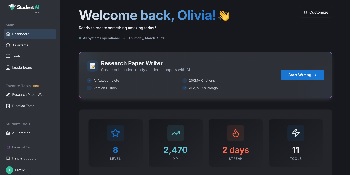
StudentAI.app is the tool on this list built specifically for the academic workflow, not repurposed from a general-purpose chatbot.
Every feature is designed around how students actually study. The AI tutors on StudentAI.app walk you through a concept step by step, generate practice questions on any topic, simulate a mock exam, and give targeted feedback on where your understanding breaks down.
The quiz generator is particularly strong. Give it a topic or paste in your notes, and it generates multiple-choice, short answer, or essay-style questions calibrated to your level. This is active recall, the most evidence-based study method available, made completely frictionless.
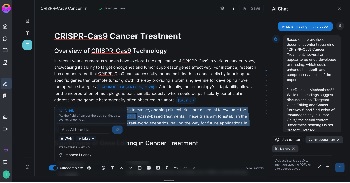
For students writing essays or research papers, the research paper tools on StudentAI.app check your argument structure, flag logical gaps, and suggest how to strengthen your thesis without writing the paper for you.
Best for: Students who want one platform covering tutoring, practice questions, essay feedback, and study planning.
Try this right now: Open StudentAI.app and generate 10 practice questions on the last topic you studied. Whatever you get wrong is your study list for tomorrow.
ChatGPT: The Swiss Army Knife for Concept Explanation
ChatGPT remains the most widely used AI tool among students in 2026, and for good reason: it is extraordinarily good at explaining things.
A first-year chemistry student described her workflow perfectly: she reads the textbook, highlights what she does not understand, then asks ChatGPT to explain it like she is 15. When she gets it, she explains it back. That is where the learning happens.
That is the right way to use it. ChatGPT as a conversation partner, not as an answer machine.
Best for: Breaking down difficult concepts, brainstorming essay angles, and working through problem-solving steps.
What to avoid: Asking it to write your assignments. The output tends to be generic, and most universities now use detection tools.
Google NotebookLM: The Best Tool for Studying Your Own Materials
If you have lecture slides, PDF textbook chapters, or research papers to understand, NotebookLM changes everything.
You upload your source documents and it becomes an AI that only knows what is in those documents. Ask it to summarise a chapter, generate a quiz, explain how two concepts connect, or produce a study guide and it will do it while citing exactly which part of your notes it drew from.
This citation-grounding is the key feature. There is no hallucination risk when the AI is constrained to your actual materials.
NotebookLM is 100% free, built by Google, and works in any browser.
Best for: Turning your own notes, slides, and PDFs into an interactive study session.
Pro tip: Upload your syllabus alongside your notes so the AI knows which topics carry the most weight in your exam.
Perplexity AI: The Research Tool That Replaces Google
For any assignment requiring real sources, Perplexity AI has become indispensable for serious students.
Unlike ChatGPT, Perplexity searches the live web and provides inline citations for every claim it makes. You can see exactly where each piece of information came from and click through to verify it.
This matters because one of the biggest risks with AI research tools is citation fabrication. Perplexity addresses this by grounding every answer in real, current sources.
Best for: Literature reviews, finding current statistics, and building a bibliography.
Claude: The Best AI Tools for students in 2026 for Long Documents and Writing Feedback
Claude has a larger context window than most AI tools, meaning it can read and analyse much longer documents in a single session.
For students working with long papers, dense textbooks, or complex legal or scientific texts, this is a meaningful advantage. Claude also tends to give more nuanced, careful writing feedback than ChatGPT. If you have a first draft and want critique that goes beyond grammar, Claude is worth trying.
Best for: Analysing long documents, getting detailed essay feedback, and understanding complex academic texts.
How to Build Your Personal AI Study Stack
Here is the 3-tool combination that works for most students across most subjects:
- StudentAI.app for active practice. Generate practice questions, take mock quizzes, and use the AI tutor when you hit a concept you cannot crack.
- NotebookLM for your source materials. Upload your lecture slides and readings at the start of each week. Use it to create a study guide before exams.
- Perplexity for any research task. When an assignment requires sources, start here. Build your bibliography, then go read the actual papers.
Quick self-check: Right now, which of your current subjects do you have zero practice questions for? That is where to start tonight.
What the Research Actually Says About Best AI Tools for Students in 2026
A May 2026 study published in Science surveyed 95,000 students across 20 major US research universities. Led by UC Berkeley researcher Igor Chirikov, the study found about 40% of students use AI at least monthly, with significant variation by discipline.
The most important finding: students who benefited most from AI used it for active engagement with material, not passive consumption. Students who used AI to generate practice questions and identify weak spots showed stronger outcomes than those who used it primarily to get answers.
The fix is simple. Use AI to make you produce things: answers, explanations, questions. Not just to read things.
The One Habit That Separates Students Who Improve from Those Who Don’t
Every high-performing student I have seen use AI effectively shares one habit: they use AI to test themselves, not to read summaries.
The workflow is simple:
- Study a topic using your notes or NotebookLM
- Close everything
- Open StudentAI.app and generate 10 practice questions
- Answer them from memory
- Check your results and study the gaps
Repeat this three times before your exam. The improvement is measurable.
Frequently Asked Questions: Best AI Tools for Students in 2026
What is the best AI tool for students in 2026?
The best AI tool depends on the task. StudentAI.app leads for structured practice and tutoring. NotebookLM is best for studying from your own materials. Perplexity wins for research. ChatGPT remains the best for concept explanation and brainstorming. Most effective students combine 2 to 3 tools.
Is using AI for studying cheating?
No. Using AI as a study partner is not cheating. A 2026 UC Berkeley study found the distinction lies in how AI is used: explaining concepts and generating practice questions is studying. Submitting AI-written work as your own is what institutions classify as dishonesty.
Which free AI study tools are worth using?
NotebookLM is completely free and excellent. ChatGPT free tier handles most study tasks. StudentAI.app has a free tier with access to its core tools. Perplexity free plan covers most research needs.
How do I use AI without becoming dependent on it?
Always produce before you consume. Write your own answer before asking the AI. Use AI to check your thinking, not to replace it. Close it periodically and test what you can recall without help.
Can AI tools help with maths and science subjects?
Yes, and this is where tools like StudentAI.app and ChatGPT genuinely shine. They walk through problem-solving steps, explain where your working went wrong, and generate practice problems at your level.
What AI tool is best for writing essays?
For essays: write your own draft first, always. Then use StudentAI.app or Claude for structural feedback. Use Perplexity to find and verify sources. Avoid using AI to write the whole essay since the thinking that happens during writing is a significant part of the learning.
How much time should I spend using AI tools each week?
The right measure is whether your AI time is active or passive. If you are generating questions and self-testing, 30 to 60 minutes of focused AI-assisted study per subject per week is typically productive.
Internal Links: Best AI Tools for Students in 2026
- How to Make Better Decisions
- How to Improve your Communication Skills
- Growth Mindset for Students
- How to Take Effective Notes in Class
- How to Develop Critical Thinking Skills
- Leadership Skills Every University Student Should Develop
- How to Prepare for Your First Job Interview
- Top 10 Life-Changing Skills
- How to Stop Procrastination and Boost Productivity
- International Universities Admissions
- International Fully funded Scholarships Opportunities
- International Internships Opportunities
- Download Center
Why Follow EduInfoPedia?
EduInfoPedia regularly publishes:
- Fully Funded Scholarships
- International University Admissions
- Summer Internships
- Exchange Programs
- Government Scholarships
- Research Opportunities
- Career Guidance
Our goal is to help students discover authentic educational opportunities from around the world.
Images: Best AI Tools for Students in 2026