
Introduction
Growth Mindset for Students
The academic journey is rarely a smooth path. Students constantly face a barrage of difficulties, ranging from complex concepts and disappointing grades to intense exam anxiety and time management struggles. For many, these hurdles feel like permanent roadblocks that define their intelligence or limitations. However, the secret to overcoming these obstacles does not lie in natural talent, but in perspective. By changing how they view friction, students can transform stressful setbacks into stepping stones for personal development.
Adopting a growth mindset is the ultimate catalyst for this academic transformation. Pioneered by psychologist Carol Dweck, this philosophy emphasizes that intelligence and abilities can be developed through dedication, hard work, and strategies. When students realize that their brains are malleable muscles that grow stronger with effort, their relationship with failure changes completely. Challenges cease to be threats to their self-worth and instead become the exact fuel required to unlock their highest potential.
Table of Contents
Why Growth Mindset for Students
A growth mindset fundamentally alters a student’s cognitive and emotional processing. It replaces the fear of judgment with a passion for learning.
- Brain Plasticity: Neuroplasticity proves that the brain forms new neural connections when solving difficult problems.
- Resilience Building: Setbacks are viewed as temporary feedback loops rather than permanent, defining defeats.
- Reduced Anxiety: Shifting focus from perfect outcomes to progress lowers academic stress and test anxiety.
- Higher Engagement: Students become active participants in their education, seeking out deeper conceptual mastery.
- Lifelong Adaptability: It builds professional skills, preparing students for an ever-changing global workplace.
Top Tips to Turn Challenges into Opportunities
- Reframe the Vocabulary: Add the word “yet” to every negative self-assessment statement.
- Deconstruct the Failure: Analyze low grades objectively to pinpoint specific conceptual misunderstandings.
- Embrace Hard Work: Celebrate the hours spent practicing rather than just the final grade.
- Vary Learning Strategies: Switch study methods instead of repeating the same failing technique.
- Seek Active Feedback: Ask teachers for specific critiques rather than avoiding constructive criticism.
- Normalize the Friction: Remind yourself that confusion is the exact moment learning occurs.
Outcome of Tips
Implementing these strategies produces tangible shifts in student performance and mental health.
- Academic Improvement: Consistent effort applied to weaknesses naturally raises test scores over time.
- Increased Confidence: Overcoming self-proclaimed “hard” topics builds a track record of personal success.
- Intrinsic Motivation: Learning becomes driven by curiosity rather than external validation or parental pressure.
- Proactive Problem Solving: Students stop avoiding hard classes and actively choose challenging assignments.
Frequently Asked Questions (FAQs)
What is the main difference between a fixed and growth mindset?
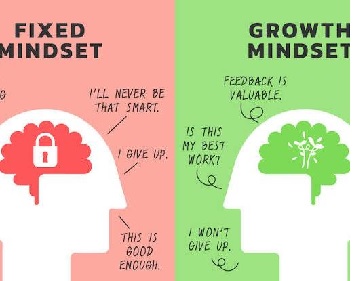
A fixed mindset assumes intelligence is static and unchangeable. A growth mindset believes abilities can be developed through effort and strategy.
Can a student have both mindsets simultaneously?
Yes, mindsets are highly situational. A student might have a growth mindset in history but a fixed mindset in mathematics.
How long does it take to develop a growth mindset?
It is a lifelong continuous practice. Cognitive shifts begin within weeks of conscious effort and reframing.
Does a growth mindset guarantee straight A’s?
No, it does not guarantee perfection. It guarantees maximized potential, improved resilience, and continuous academic progress.
How should I handle a teacher’s negative feedback?
Separate your self-worth from the critique. View the feedback as a customized roadmap detailing exactly how to improve.
What should I do when hard work doesn’t pay off?
Evaluate your strategy. Hard work without the right learning methods is inefficient; pivot your study techniques.
External Resources and Links: Growth Mindset for Students
- Mindset Works: Visual tools, articles, and training resources based on Carol Dweck’s research.
- The Learning Scientists: Evidence-based study strategies to help translate growth mindset effort into actual results.
- Khan Academy Growth Mindset: Interactive activities and videos designed for students to understand brain plasticity.
Final Thoughts
Genius is not born; it is forged through persistence. A growth mindset does not make academic challenges disappear, but it strips them of their power to discourage you. Every difficult math problem, every dense essay prompt, and every low quiz score is simply an invitation for your brain to grow. Treat your education as a marathon of iterations rather than a sprint for perfection. The moment you change your perspective, your potential becomes completely limitless.
Relevant Tags
#GrowthMindset#StudentSuccess#AcademicResilience#StudyTips#OvercomingFailure#MotivationForStudents
Visual Inspiration of Growth Mindset for Students
Here are conceptual visuals that illustrate the core mechanics of mindset development:
- The Neuroplasticity Map: Diagrams showcasing neural pathways multiplying during complex problem-solving tasks.
- The Iceberg Success Illusion: Infographics contrasting visible student success with the hidden foundation of failures and persistence.
- The “Yet” Pivot Chart: Visual tables contrasting fixed phrases with their growth-oriented, actionable counterparts.


Internal Resources: Growth Mindset for Students
- How to Take Effective Notes in Class
- How to Develop Critical Thinking Skills
- Leadership Skills Every University Student Should Develop
- How to Prepare for Your First Job Interview
- Top 10 Life-Changing Skills
- How to Stop Procrastination and Boost Productivity
- International Universities Admissions
- International Fully funded Scholarships Opportunities
- International Internships Opportunities
- Download Center